The Excise Goods (Accompanying Documents) Regulations 2002
S.I. 2002/501 · Made 6 March 2002 · Extends to United Kingdom
CUSTOMS AND EXCISE
Made 6th March 2002
Laid before Parliament 8th March 2002
Coming into force 1st April 2002
F1The Commissioners of Customs and Excise, in exercise of the powers conferred upon them by sections 93(1), (2)(a), (e), (fa), (fb), (g), (h), (j), (k), (3), (4) and (5), 100G, 100H and 118A(1) and (2) of the Customs and Excise Management Act 1979M1, section 1 of the Finance (No. 2) Act 1992M2; and additionally, being a department designatedM3 for the purposes of section 2(2) of the European Communities Act 1972M4 in relation to excise matters of the European Communities and payment of excise duty, in exercise of the powers conferred by that section, and of all other powers enabling them in that behalf, hereby make the following regulations:C1C2C3
Annotations to the whole text
Textual amendments
- F1
Regulations revoked (except for regs. 1, 27, 30, Sch.) (1.4.2010) by The Excise Goods (Holding, Movement and Duty Point) Regulations 2010 (S.I. 2010/593), regs. 2, 91, Sch. 3 Table (with Sch. 3 Notes 3, 4)
Marginal citations
- M1
1979 c. 2; section 1(1) defines “the Commissioners”, “excise duty point”, “excise warehouse”, “exporter”, “officer”, “registered excise dealer and shipper” and “registered excise dealers and shippers regulations”; section 93(2)(a) was amended by the Finance Act 1981(c. 35), Schedule 8, paragraph 2; section 93(1) and (3) was amended by, and section 93(2)(fa) and (fb) was inserted by the Finance (No. 2) Act 1992(c. 48), Schedule 2, paragraph 2; section 93(2)(g) to (l) was inserted by the Finance Act 1986(c. 41), Schedule 3, paragraph 4, and amended by the Finance (No. 2) Act 1992, Schedule 2, paragraph 2; sections 100G and 100H were inserted by the Finance Act 1991(c. 31), Schedule 4; section 100H was amended by the Finance (No. 2) Act 1992, Schedule 1, paragraph 6 and Schedule 2, paragraph 4; section 118A(1) and (2) was inserted by the Finance Act 1991, Schedule 5.
- M2
- M3
S.I. 1980/865 (excise matters of the European Communities) and S.I. 1982/529 (payment of excise duty).
- M4
Modifications
- C1
Regulations applied (with modifications) (24.11.2003) by The Channel Tunnel (Alcoholic Liquor and Tobacco Products) Order 2003 (S.I. 2003/2758), arts. 1, 2(e), Sch.
- C2
Regulations modified (1.5.2004) by The Excise Duty Points (Etc.) (New Member States) Regulations 2004 (S.I. 2004/1003), regs. 1, 7
- C3
Regulations applied (1.7.2005) by The Denatured Alcohol Regulations 2005 (S.I. 2005/1524), regs. 1, 18
Contents
- Part I: PRELIMINARY
- 1Citation and commencement
- 2Interpretation Repealed
- 3Application Repealed
- Part II: EXPORTS UNDER DUTY SUSPENSION ARRANGEMENTS Repealed
- 4Application of Part II Repealed
- 5Completion of accompanying administrative documents Repealed
- 6Accompanying administrative documents for exports — supplementary provisions Repealed
- 7Consignees Repealed
- Part III: EXPORTS NOT UNDER DUTY SUSPENSION ARRANGEMENTS Repealed
- 8Application of Part III Repealed
- 9Completion of simplified accompanying documents Repealed
- 10Simplified accompanying documents for exports — supplementary provisions Repealed
- Part IV: IMPORTS UNDER COMMUNITY DUTY SUSPENSION ARRANGEMENTS Repealed
- 11Application of Part IV Repealed
- 12Accompanying administrative documents for imports Repealed
- 13Accompanying administrative documents for imports — supplementary provisions Repealed
- 14Receipt of goods under Community duty suspension arrangements Repealed
- Part V: IMPORTS NOT UNDER COMMUNITY DUTY SUSPENSION ARRANGEMENTS Repealed
- 15Application of Part V Repealed
- 16Simplified accompanying documents for imports Repealed
- 17Simplified accompanying documents for imports — supplementary provisions Repealed
- 18Receipt of excise goods Repealed
- Part VI: OBLIGATIONS, CONDITIONS AND RESTRICTIONS Repealed
- 19General conditions and restrictions Repealed
- 20Obligations of owners and transporters Repealed
- Part VII: EXCISE DUTY POINT, PAYMENT OF EXCISE DUTY, FORFEITURE AND CIVIL PENALTIES Repealed
- 21Excise duty point Repealed
- 22Payment Repealed
- 23Time for payment Repealed
- 24Forfeiture Repealed
- 25Civil penalties Repealed
- Part VIII: ADMINISTRATIVE PROVISION AND CONSEQUENTIAL AMENDMENTS
- 26Administrative provision—imports Repealed
- 27Excise Warehousing (Etc.) Regulations 1988
- 28The Excise Goods (Holding, Movement, Warehousing and REDS) Regulations 1992 Repealed
- 29The Beer Regulations 1993 Repealed
- 30The Warehousekeepers and Owners of Warehoused Goods Regulations 1999 Repealed
- Signature
- Schedule Schedule
- Schedule 4
- Paragraph Repealed
- Paragraph Repealed
- Paragraph Repealed
- Paragraph Repealed
- Paragraph Repealed
- Paragraph Repealed
- Explanatory note
1Citation and commencement
These Regulations may be cited as the Excise Goods (Accompanying Documents) Regulations 2002 and come into force on 1st April 2002.
2InterpretationF1
. . . . . . . . . . . . . . . . . . . . . . . . . . . . . . . .
3ApplicationF1
. . . . . . . . . . . . . . . . . . . . . . . . . . . . . . . .
4Application of Part IIF1
. . . . . . . . . . . . . . . . . . . . . . . . . . . . . . . .
5Completion of accompanying administrative documentsF1
. . . . . . . . . . . . . . . . . . . . . . . . . . . . . . . .
6Accompanying administrative documents for exports — supplementary provisionsF1
. . . . . . . . . . . . . . . . . . . . . . . . . . . . . . . .
7ConsigneesF1
. . . . . . . . . . . . . . . . . . . . . . . . . . . . . . . .
8Application of Part IIIF1
. . . . . . . . . . . . . . . . . . . . . . . . . . . . . . . .
9Completion of simplified accompanying documentsF1
. . . . . . . . . . . . . . . . . . . . . . . . . . . . . . . .
10Simplified accompanying documents for exports — supplementary provisionsF1
. . . . . . . . . . . . . . . . . . . . . . . . . . . . . . . .
11Application of Part IVF1
. . . . . . . . . . . . . . . . . . . . . . . . . . . . . . . .
12Accompanying administrative documents for importsF1
. . . . . . . . . . . . . . . . . . . . . . . . . . . . . . . .
13Accompanying administrative documents for imports — supplementary provisionsF1
. . . . . . . . . . . . . . . . . . . . . . . . . . . . . . . .
14Receipt of goods under Community duty suspension arrangementsF1
. . . . . . . . . . . . . . . . . . . . . . . . . . . . . . . .
15Application of Part VF1
. . . . . . . . . . . . . . . . . . . . . . . . . . . . . . . .
16Simplified accompanying documents for importsF1
. . . . . . . . . . . . . . . . . . . . . . . . . . . . . . . .
17Simplified accompanying documents for imports — supplementary provisionsF1
. . . . . . . . . . . . . . . . . . . . . . . . . . . . . . . .
18Receipt of excise goodsF1
. . . . . . . . . . . . . . . . . . . . . . . . . . . . . . . .
19General conditions and restrictionsF1
. . . . . . . . . . . . . . . . . . . . . . . . . . . . . . . .
20Obligations of owners and transportersF1
. . . . . . . . . . . . . . . . . . . . . . . . . . . . . . . .
21Excise duty pointF1
. . . . . . . . . . . . . . . . . . . . . . . . . . . . . . . .
22PaymentF1
. . . . . . . . . . . . . . . . . . . . . . . . . . . . . . . .
23Time for paymentF1
. . . . . . . . . . . . . . . . . . . . . . . . . . . . . . . .
24ForfeitureF1
. . . . . . . . . . . . . . . . . . . . . . . . . . . . . . . .
25Civil penaltiesF1
. . . . . . . . . . . . . . . . . . . . . . . . . . . . . . . .
26Administrative provision—importsF1
. . . . . . . . . . . . . . . . . . . . . . . . . . . . . . . .
27Excise Warehousing (Etc.) Regulations 1988
Amend the Excise Warehousing (Etc.) Regulations 1988 M1 as follows.
After regulation 10 insert—
“ Goods to which section 46 of the Customs and Excise Management Act 1979 applies
10A(1)This regulation applies to goods other than hydrocarbon oil M2 that have been imported from a place outside the Communities (“section 46 goods”).
(2)Section 46 goods may be entered for warehousing and moved from their place of importation to an excise warehouse without payment of excise duty if, but only if, the following conditions are complied with—
(a)any customs duty charged on the goods is paid or otherwise accounted for to the satisfaction of the Commissioners, and
(b)at all times during the movement the goods are accompanied by a copy of copy 6 of the single administrative document that was used to make the customs declaration for those goods.
(3)In this regulation the references to copy 6 of the single administrative document and the customs declaration have the same meaning as in Commission Regulation (EEC) No. 2454/93 M3.”
After regulation 17(5) insert—
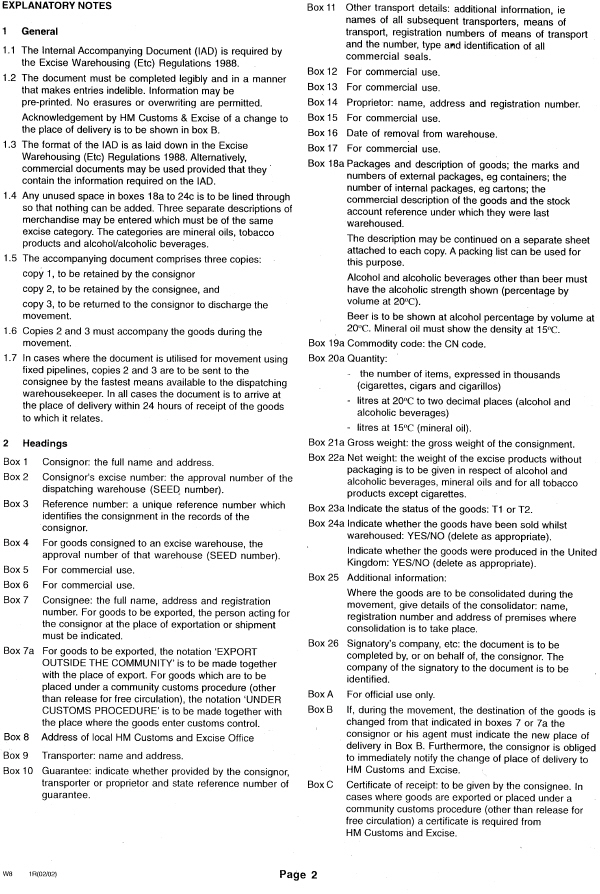
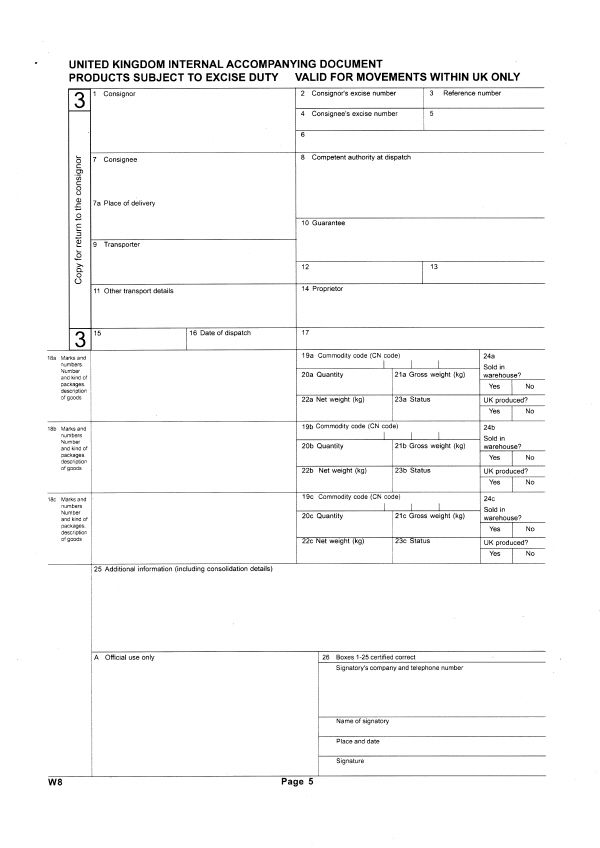
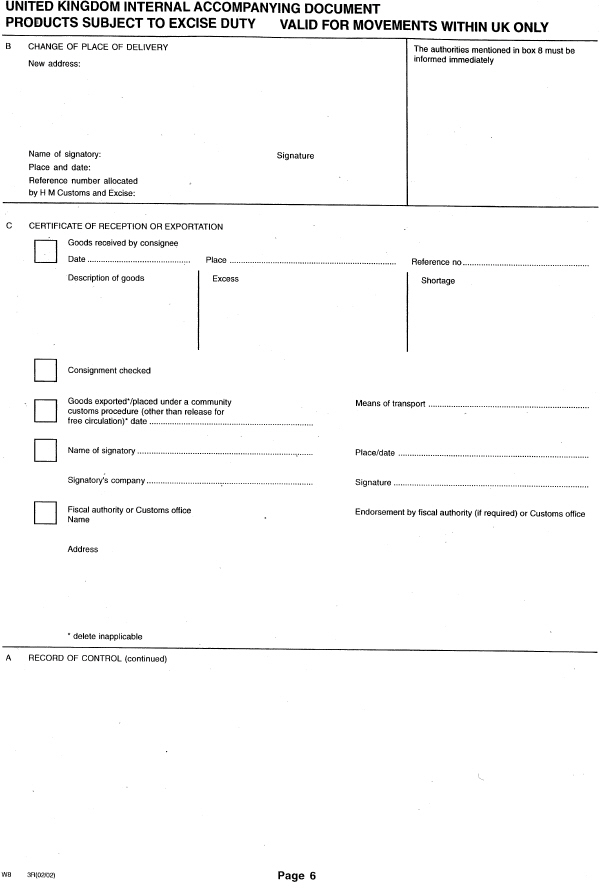
“(6)Subject to paragraph (7) below, goods entered for removal from an excise warehouse for any of the purposes set out in regulation 16 above shall be accompanied by an accompanying document that has been completed and is used in accordance with the instructions for completion and use set out on the reverse of copy 1 of that document.
(7)Paragraph (6) above does not apply to—
(a)goods entered for removal for home use, shipment as stores or denaturing;
(b)goods entered for removal for use by a person to whom section 13A of the Customs and Excise Duties (General Reliefs) Act 1979 M4 (reliefs from duties and taxes for persons enjoying certain immunities and privileges) applies;
(c)goods entered for removal that are, in accordance with regulations made under section 12(1) of the Customs and Excise Duties (General Reliefs) Act 1979 (supply of duty-free goods to Her Majesty’s ships), to be treated as exported;
(d)spirits entered for removal for use by a person authorised to receive them in accordance with section 8 of the Alcoholic Liquor Duties Act 1979 M5 (remission of duty in respect of spirits used for medical or scientific purposes);
(e)goods entered for removal for exportation in circumstances to which Part II of the Excise Goods (Accompanying Documents) Regulations 2002 apply;
(f)goods that are being lawfully moved under the cover of a single administrative document; or
(g)any goods that are entered for removal from an excise warehouse for any of the purposes set out in regulation 16 above before 1st October 2002 if those goods are accompanied by a document that has been approved by the Commissioners for that purpose.
(8)If there is a contravention of, or failure to comply with, paragraph (6) above, the excise duty point for excise goods that are required by this regulation to be accompanied by an accompanying document is the time those goods were removed from the excise warehouse.
(9)The person liable to pay the excise duty at the excise duty point is—
(a)the person who arranged for the security required by regulation 16(5) above, or
(b)if regulation 16(5) above was not complied with, the authorized warehousekeeper.
(10)Any person whose conduct caused a contravention of, or failure to comply with, paragraph (6) above is jointly and severally liable to pay the excise duty with the person specified in paragraph (9) above.
(11)Any excise duty that any person is liable to pay by virtue of this regulation must be paid immediately.
(12)In this regulation—
“single administrative document” has the same meaning as in Commission Regulation (EEC) No. 2454/93;
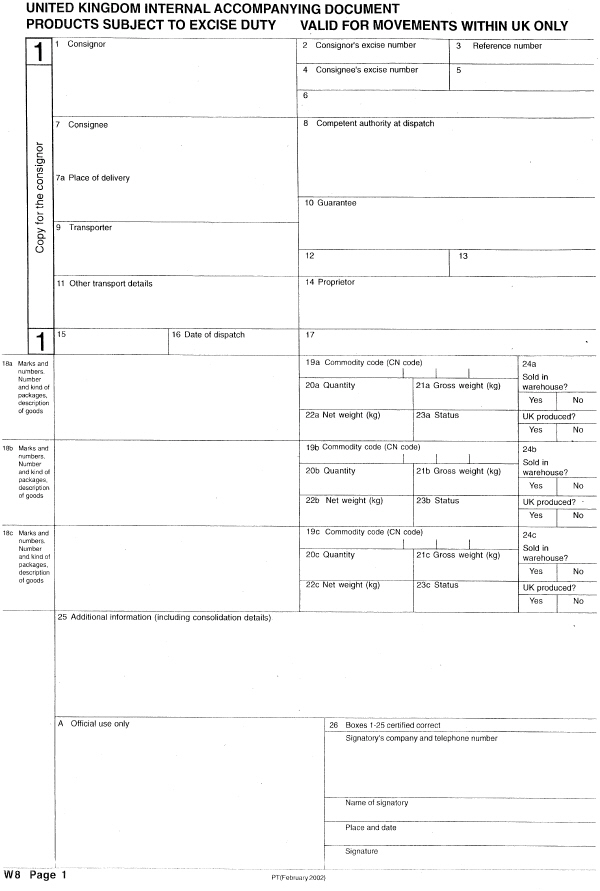
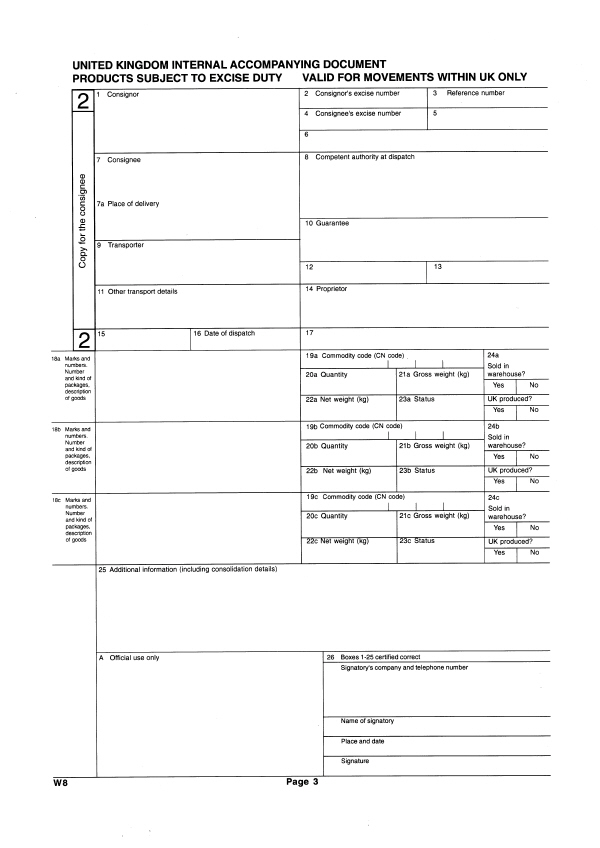
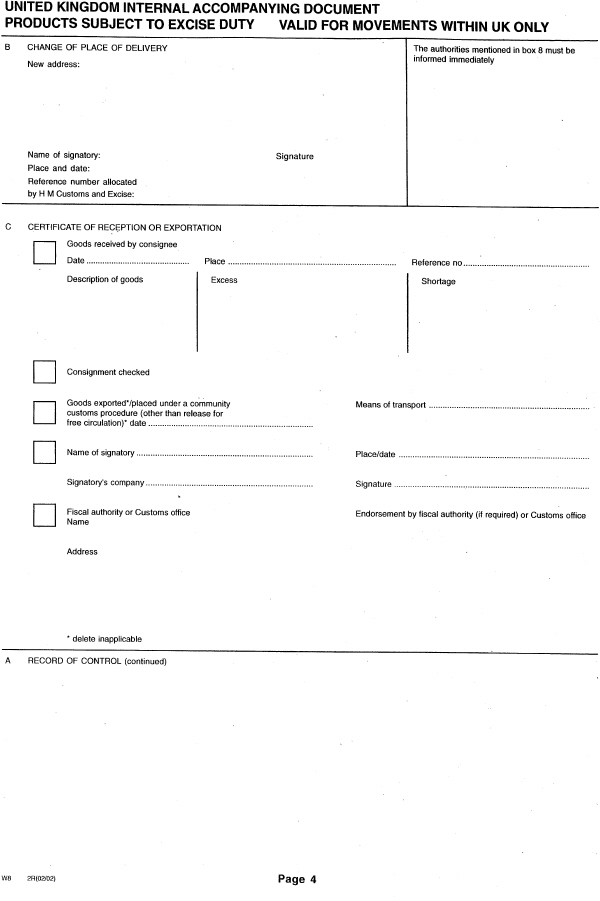
“accompanying document” means the document set out in Schedule 4 below.”
Insert Schedule 4 (set out in the Schedule below) after Schedule 3.
28The Excise Goods (Holding, Movement, Warehousing and REDS) Regulations 1992F1
. . . . . . . . . . . . . . . . . . . . . . . . . . . . . . . .
29The Beer Regulations 1993F1
. . . . . . . . . . . . . . . . . . . . . . . . . . . . . . . .
30The Warehousekeepers and Owners of Warehoused Goods Regulations 1999F1
. . . . . . . . . . . . . . . . . . . . . . . . . . . . . . . .
Signature
New King’s Beam House 22 Upper Ground LONDON SE1 9PJ
M J Eland
Commissioner of Customs and Excise
Explanatory note
(This note is not part of the Regulations)
These Regulations come into force on 1st April 2002.
Purpose of the Regulations
These Regulations implement the requirements of Council Directive 92/12/EEC (OJ No. L76, 23.3.1992, p.1) (as amended) in respect of the documentation required to accompany commercial movements of excise goods within the European Union. They provide for the creation of excise duty points, and identify the persons liable to pay, where there is a failure to comply with (i) those requirements, (ii) Commission Regulation (EEC) No. 2719/92 (OJ No. L276, 19.9.1992, p.1) (as amended) and (iii) Commission Regulation (EEC) No. 3649/92 (OJ No. L369, 18.12.1992, p.17).
A transposition note setting out how these Regulations implement the requirements of Council Directive 92/12/EEC is available from—
HM Customs and Excise,
Tax Practice—Excise Social Regimes,
Holding and Movements,
3W Ralli Quays,
3 Stanley Street,
SALFORD,
M60 9LA.
Content of the Regulations
Part I. Preliminary
Regulations 1 and 2 are concerned with citation and commencement and interpretation.
Regulation 3 provides that these Regulations do not apply to goods in a variety of circumstances. They do not apply to movements under the cover of a single administrative document, to movements from or to registered beer stores, breweries, wineries, cider maker’s premises, and registered tobacco factories or stores. In addition they do not apply to goods that are for persons enjoying diplomatic immunities and privileges or that are for the Royal Navy.
Part II. Exports under duty suspension arrangements
Regulation 4 provides that this part of the Regulations does not apply to goods which are supplied as distance sales by a UK vendor.
Regulation 5 requires the warehousekeeper to ensure accompanying administrative documents (AADs) are completed in compliance with the Community provisions before duty suspended goods are removed from a warehouse for dispatch to another member State (or third country via another member State) and places an obligation upon him, and persons acting on his behalf, to comply with the Community provisions concerning AADs. It also requires AADs for such goods where they are exported from the United Kingdom to another member State in the course of a movement to an ultimate destination within the United Kingdom.
Regulation 6 details those changes which may be made to an AAD after a movement has begun (and the procedures which must be followed) and requires the goods to be accompanied by the AAD. It requires that, if the consignee of excise goods is a non-registered trader, then a certificate of payment must accompany the AAD and the goods at all times until the goods arrive at their ultimate destination. It also requires warehousekeepers, as far as it is their power to do so, to ensure that the Community provisions are complied with until goods reach their destination.
Regulation 7 specifies the classes of person who may be shown as the consignee on an outward AAD and defines them.
Part III. Exports not under duty suspension arrangements
Regulation 8 provides that this part of the Regulations does not apply to goods supplied as distance sales by a UK vendor or under the simplified procedures of the Excise Goods (Sales on Board Ships and Aircraft) Regulations 1999 and goods exported by a person for his own use.
Regulation 9 requires UK suppliers to ensure simplified accompanying documents (SADs) are completed before duty paid goods are exported to another member State and places an obligation upon the supplier to comply with the Community provisions concerning simplified accompanying documents. It also requires SADs for such goods where they are exported from the United Kingdom to another member State in the course of a movement to an ultimate destination within the United Kingdom.
Regulation 10 prohibits the amendment of SADs and requires SADs and certificates of payment to accompany goods until those goods reach their ultimate destination. Exporters, so far as it is their power to do so, must ensure that the Community provisions are complied with.
Part IV. Imports under Community duty suspension arrangements
Regulation 11 provides that this part of the Regulations does not apply to goods which are not imported under Community duty suspension arrangements, goods supplied under the simplified procedures of the Excise Goods (Sales on Board Ships and Aircraft) Regulations 1999, goods imported as an inward distance sale and goods imported by a person for his own use.
Regulation 12 specifies the classes of person who may be shown as the consignee on an inward AAD and requires the goods to be accompanied by the AAD.
Regulation 13 details those changes which may be made to an AAD after a movement has begun and the goods have been imported into the UK. It also requires the consignee, as far as it is in his power to do so, to ensure that the Community provisions are complied with until goods reach their destination.
Regulation 14 places a responsibility upon the consignee to perform various functions in respect of AADs received by him.
Part V. Imports not under Community duty suspension arrangements
Regulation 15 provides that this part of the Regulations does not apply to goods which are supplied under the simplified procedures of the Excise Goods (Sales on Board Ships and Aircraft) Regulations 1999, goods imported as an inward distance sale and goods imported by a person for his own use.
Regulation 16 specifies the classes of person to whom goods may be consigned on an inward SAD and requires the goods to be accompanied by the SAD.
Regulation 17 requires the consignee to ensure, as far as it is in his power to do so, that there is compliance with the Community provisions at all times. It requires that a certificate of payment must accompany the SAD and the excise goods at all times until the goods reach their ultimate destination. SADs cannot be amended.
Regulation 18 places a responsibility upon the recipient to perform various functions in respect of SADs received by him.
Part VI. Obligations, conditions and restrictions
Regulation 19 permits the Commissioners to impose conditions on authorized warehousekeepers, registered excise dealers and shippers, occasional importers and transporters.
Regulation 20 requires the transporter and the driver of any vehicle carrying excise goods to produce (or cause to be produced) the relevant accompanying document and to ensure, as far as it is in their power to do so, that there is compliance with the Community provisions at all times.
Part VII. Excise duty point, payment of excise duty, forfeiture and civil penalties
Regulation 21 provides for the excise duty point.
Regulation 22 identifies the persons liable to pay the duty at the excise duty point.
Regulation 23 specifies the time for payment of the excise duty.
Regulation 24 provides for forfeiture of the goods where there is a contravention of the Regulations or a relevant condition or restriction.
Regulation 25 provides for civil penalties where there is a contravention of or failure to comply with certain regulations or any Community provision.
Part VIII. Administrative provision and consequential amendments
Regulation 26 imposes obligations upon the Commissioners in respect of AADs which they receive.
Regulations 27 to 30 make largely consequential amendments to the Excise Warehousing (Etc.) Regulations 1988 (S.I. 1988/809), the Excise Goods (Holding, Movement, Warehousing and REDS) Regulations 1992 (S.I. 1992/3135), the Beer Regulations 1993 (S.I. 1993/1228), and the Warehousekeepers and Owners of Warehoused Goods Regulations 1999 (S.I. 1999/1278). In addition, regulation 27 amends the Excise Warehousing (Etc.) Regulations 1988 to make provision for a document to accompany duty suspended movements of excise goods between excise warehouses.